
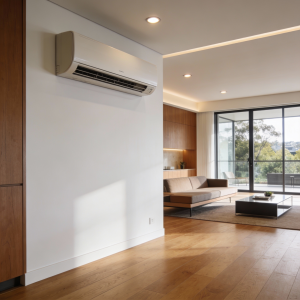
Open-plan living has become the norm in modern homes. Large kitchens flowing into dining and living areas create bright, social spaces that feel great to live in, however when it comes to air conditioning, these layouts can be surprisingly difficult to cool evenly.
If your open-plan area never quite feels comfortable, or one side of the room is always warmer than the other, the issue is rarely the air conditioner alone. More often, it comes down to how the system has been designed for the space.
Bigger Spaces Create Bigger Challenges
Open-plan rooms are often much larger than traditional enclosed spaces. High ceilings, wide spans and fewer internal walls mean there is more air to cool and fewer natural barriers to contain it.
If an air conditioner is undersized or positioned without considering how air will move across the space, it can struggle to maintain a consistent temperature. The system may run longer, work harder and still leave certain areas uncomfortable.
Airflow Matters More Than You Think
In open-plan layouts, airflow becomes critical. Cool air needs to travel across a large area, around furniture, past kitchen cabinetry and sometimes into adjoining hallways or stairwells.
Without proper outlet placement and return air paths, cooled air can short-cycle near the unit instead of circulating through the entire room. This often leads to hot spots, uneven temperatures and systems that feel ineffective despite running constantly.
Heat Load Is Often Underestimated
Open-plan living areas usually include large windows, sliding doors and open connections to outdoor spaces. These features let in light and airflow but also introduce significant heat, particularly in the afternoon.
If sun exposure, glazing type and insulation levels aren’t factored into the design, the air conditioner may be fighting a constant heat load it was never sized to handle. This is one of the most common reasons systems struggle in modern homes.
Zoning Makes a Big Difference
One of the most effective ways to manage open-plan spaces is zoning. Instead of treating the entire area as a single zone, zoning allows different sections of the home to be cooled independently.
This is especially helpful when parts of the space are used at different times of day or receive different levels of sunlight. Zoning improves comfort, reduces unnecessary energy use and gives homeowners more control over how their system operates.
Design First, Not Just Installation
Many air conditioning issues in open-plan homes come back to design decisions made early on. Where the unit is placed, how many outlets are installed and how air returns are managed all influence how well the system performs.
A design-led approach looks beyond the size of the room and considers how the space is actually lived in. That includes furniture layout, ceiling height, daily usage patterns and future changes to the home.
This is where professional residential air conditioning services add real value. Instead of simply installing a unit, the focus is on creating a system that works with the layout of the home rather than against it.
Comfort Should Feel Effortless
When an air conditioning system is designed properly, you shouldn’t have to think about it. The space should feel comfortable without constant adjustments or compromises.
Open-plan homes can be cooled effectively, but they require thoughtful planning and the right setup. Addressing airflow, zoning and heat load from the start leads to better comfort, lower running costs and a system that performs as intended.